
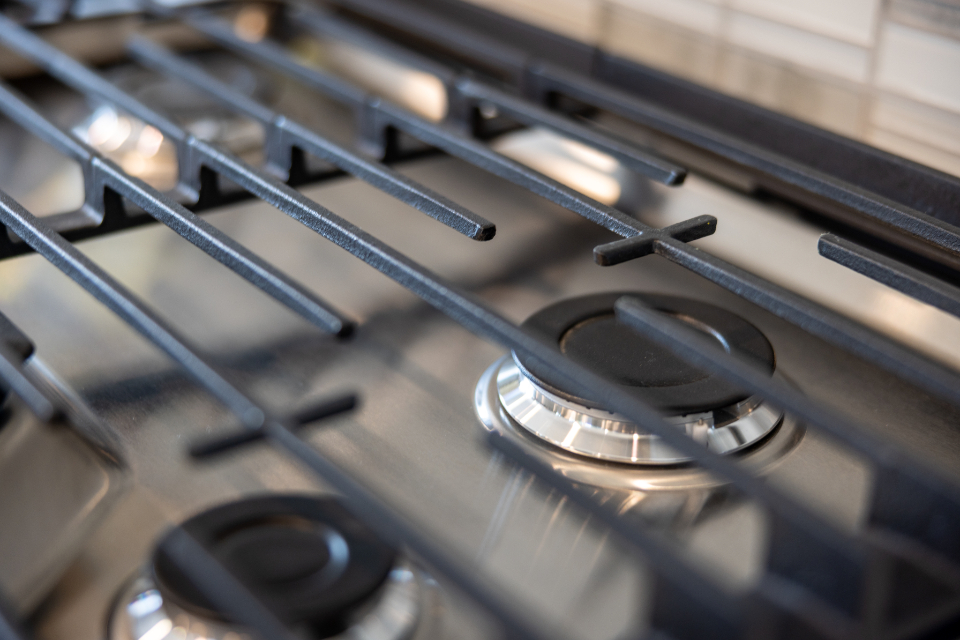
A side-by-side look at gas, electric and induction ranges: what each costs to run, how each cooks, and which safety questions matter most in a kitchen with kids.
What to remember
- New DOE efficiency standards for gas and electric cooking products take effect in 2028 and are projected to save about $1.6 billion on utility bills over 30 years.
- Induction transfers about 85% of heating energy into cookware compared with roughly a third for gas, and can boil water in nearly half the time.
- Anti-tip brackets have been required since 1991, but installers sometimes skip them; CPSC staff counted 38 tipover deaths from 1980 through 2008, 20 involving children aged 1 to 5.
- Gas ranges need a hood vented outdoors, back-burner habits and a CO alarm; the CPSC recommends an alarm meeting the UL 2034 standard in every home.
- An ENERGY STAR certified electric range may qualify for a rebate of up to $840, with states, territories and Tribes deciding which products qualify.
A range is one of the longest-serving appliances in a kitchen, and it is also one that young children reach long before they understand it. The choice usually comes down to gas or electric, with induction now a widely available electric option. Each type cooks differently, costs differently to run and raises different safety questions, so comparing them side by side makes sense.
What Each Type Costs to Buy and Run
Sticker prices vary widely by size and features, so look past the tag to running costs and incentives. Updated Department of Energy efficiency standards for gas and electric cooking products take effect in 2028 and are projected to save Americans about $1.6 billion on utility bills over 30 years. There is no federal plan to ban gas stoves; a February 2023 efficiency proposal, if finalized, would not take effect until 2027.
On the electric side, ENERGY STAR certified electric cooking products are 18% more efficient than standard models on average, worth about $385 over their lifetime, and induction leads the category. Induction transfers about 85% of heating energy into the cookware, compared with roughly a third for gas. A certified electric stove, cooktop, range or oven may also qualify for a rebate of up to $840, or up to $8,000 under a home energy rebate program, with states, territories and Tribes deciding which products qualify. Skim the warranty terms before checkout, since coverage for repairs varies more than most shoppers expect.
Cooking Performance for Everyday Family Meals
Gas burners and electric coils or smooth tops heat a surface that then transfers heat to the pot. Induction uses an electromagnetic field that generates heat inside the cookware itself, so heating stops the moment you lift the pot away.
That direct transfer shows up in speed. Boiling water with induction can take nearly half the time it takes on gas, radiant or coil burners, and induction offers precise temperature control. The tradeoff is cookware: only flat-bottomed pots and pans that a magnet sticks to will work. Cast iron, stainless steel and enameled cast iron usually qualify, and a refrigerator magnet settles any doubt. Because less heat escapes into the room, induction also keeps the kitchen cooler through long simmers. For fast weeknight meals that suit either range, see our guide to choosing a safer pressure cooker.
Safety Around Kids: Burns, Leaks and Carbon Monoxide
Safety alert: Install an anti-tip bracket on any free-standing range, gas or electric. CPSC staff are aware of 38 range tipover fatalities from 1980 through 2008, and 20 of them, 53 percent, involved children aged 1 to 5.
Tipovers are the hazard both types share. Brackets have been required since 1991, but they involve installation steps that installers sometimes skip, so confirm yours is actually in place. From January 1, 1980 through December 31, 2006, CPSC staff documented 84 tipover injuries, most of them burns from hot liquids that spilled when a range tilted.
The types differ most on air. Burning gas produces nitrogen dioxide, carbon monoxide, methane and formaldehyde, and experts agree a malfunctioning gas stove can produce dangerous levels of carbon monoxide. The asthma evidence is mixed: one study linked gas stove use to increased asthma risk in children, while another argued that family medical history and other factors need better accounting first. A 2022 study estimated that 12.7% of current childhood asthma in the United States is attributable to gas stove use. Induction sidesteps combustion entirely, and most models shut off automatically when no pot is detected, leaving the surface much cooler.
Ventilation and Installation Requirements
If you cook with gas, ventilation is not optional. In kitchens with poor airflow or hoods that do not vent outdoors, a few minutes of gas stove use can push indoor nitrogen dioxide above the 1-hour standards set for outdoor air. Workable habits include cooking on the back burners, using a range hood that vents to the outside, cleaning or changing the filter regularly, and opening windows while you cook.
Electric ranges produce no combustion gases, though a hood still clears cooking smoke and steam. The CPSC recommends a carbon monoxide alarm in every home, one that meets the most recent UL 2034 standard, and treats alarms as a backup to, not a replacement for, professional inspection of fuel-burning appliances. Installation needs differ too: a gas range requires a sound gas connection, while an electric or induction model needs wiring that can handle its load, so budget for an installer if your kitchen needs updating.
Cleaning and Long-Term Maintenance
Flat induction and smooth-top surfaces wipe down quickly and are designed to be durable and crack resistant. Gas ranges have grates, burner caps and drip pans that come apart for cleaning, which some cooks prefer and others count as extra chores. Keep your model number handy in case a safety notice appears. The CPSC recalled about 60,000 units of one gas stove product in 2022 and 2023 after finding it could emit dangerous levels of carbon monoxide, and it pays to know what to do when something you own is recalled.
Which Range Fits Your Household
| Factor | Gas range | Electric range, including induction |
|---|---|---|
| Heat delivery | Flame heats a burner that heats the pot | Element heats the pot; induction heats the cookware directly |
| Energy efficiency | About a third of heating energy reaches the cookware | Certified models average 18% more efficient; induction transfers about 85% |
| Indoor air | Emits nitrogen dioxide, carbon monoxide and other pollutants | No combustion gases; induction shuts off without a pot |
| Kid safety | Open flame and combustion risks; CO alarm essential | Tipover risk still applies; cooler surface and auto shutoff on induction |
| Install and upkeep | Gas connection and vented hood; grates to clean | Adequate wiring; magnetic cookware for induction |
A gas range suits homes with an existing gas line, a hood vented outdoors and cooks who value visible flame control, provided they keep up ventilation habits and a working CO alarm. An electric or induction range suits families who put a premium on easier cleaning, cooler surfaces and no combustion in the kitchen, and who can confirm their cookware and wiring are ready. Either way, measure the space, verify the anti-tip bracket, and let your kitchen’s ventilation and wiring weigh in as much as the price.
Parents also ask
Are gas stoves being banned?
No. The Department of Energy has stated that neither it nor the federal government plans to ban gas stoves. A February 2023 efficiency proposal would not take effect until 2027 if finalized.
Will my current pots and pans work on an induction range?
Only flat-bottomed cookware that a magnet sticks to will work. Cast iron, stainless steel and enameled cast iron usually qualify, so test pieces with a refrigerator magnet before you shop.
Do we still need a carbon monoxide alarm with an electric range?
Yes. The CPSC recommends a CO alarm in every home, regardless of range type, as a backup to proper maintenance and professional inspection of any fuel-burning appliances you own.
What safety step do families most often miss?
Confirming the anti-tip bracket is installed. Brackets have been required since 1991, but they involve steps installers sometimes skip, so check that yours is in place.
This guide is general information for U.S. shoppers, not legal advice. Safety rules and store policies change, so follow the product’s instructions and labels and check official sources such as CPSC.gov, NHTSA.gov and FTC.gov.